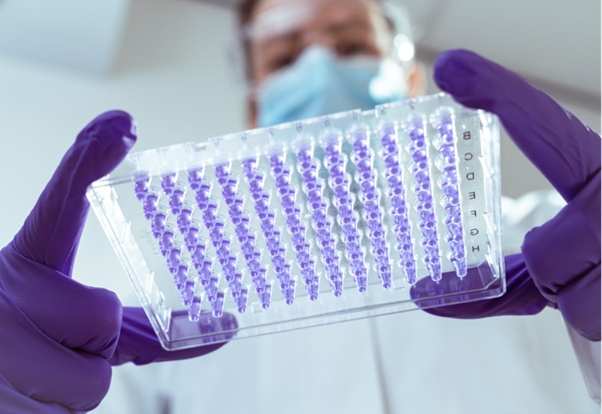
Microplates are often treated as simple consumables, but in reality, they are engineered components that directly affect assay performance, reproducibility, and sample integrity. In today’s molecular biology workflows, where volumes are smaller, throughput is higher, and sensitivity is critical - plate selection plays a central role in experimental success.
This overview highlights how choosing the right PCR, qPCR, NGS, assay, or storage plate can improve outcomes by aligning application, material, design, and sealing method, with examples from Azenta Life Sciences available through Thomas Scientific.
Start With the Application
The first question in plate selection is always application-driven. Different workflows impose very different demands on plate performance.
PCR
PCR requires plates that can withstand rapid thermal cycling while maintaining uniform heat transfer and secure sealing. Thin-walled polypropylene wells paired with rigid frames help minimize warping and evaporation.
qPCR
qPCR adds an optical requirement. White wells enhance fluorescence signal by reflecting emitted light, while optically clear heat seals ensure consistent signal detection across wells.
Next-Generation Sequencing (NGS) Library Prep
NGS workflows often involve ultra-low DNA or RNA inputs. Plates with low DNA-binding properties and V-bottom wells help minimize sample loss and improve recovery during magnetic bead–based steps.
Sample Storage
For short- or long-term storage, plates must provide chemical resistance, temperature stability, and reliable sealing - particularly when working with solvents like DMSO, phenol, or chloroform.
Assay Plates (ELISA, Fluorescence, Luminescence)
In optical assays, the choice of assay plate should be tailored to the detection method:
- White plates for luminescence
- Black plates for fluorescence
- Clear plates for colorimetric or cell-based assays
Materials Matter More Than You Think
Plate material directly impacts thermal efficiency, optical clarity, chemical compatibility, and sample interaction.
- Polypropylene (PP): Thermally stable and chemically inert, ideal for PCR, qPCR, NGS, and storage applications
- Polycarbonate (PC): Used in rigid skirts and frames to reduce warping during thermal cycling
- Polystyrene (PS): Highly transparent and ideal for endpoint optical assays, but not suitable for heat cycling
In sensitive workflows like NGS or clinical research, selecting low-binding or forensics-grade materials can significantly reduce sample loss.
Design and Engineering Drive Consistency
Beyond material choice, plate engineering determines how well a plate integrates with instruments, automation, and sealing systems.
Key design features include:
- Two-component construction (PP wells + PC frame) to reduce thermal expansion
- Skirted formats for robotic handling and barcoding
- Well shape (V-bottom, U-bottom, or flat-bottom) matched to assay needs
- Optical well colors to improve signal-to-noise ratios
High-throughput workflows benefit from rigid, skirted plates that maintain dimensional stability during thermal cycling and automated handling.
Sealing Methods: A Critical Performance Factor
Sealing directly affects evaporation, contamination risk, and reproducibility. Comparative studies consistently show that heat sealing delivers the lowest evaporation per well and the most uniform seal, making it the gold standard for PCR, qPCR, NGS, and high-throughput workflows.
Other options remain useful in specific contexts:
- Cap strips for small batch or manual workflows
- Sealing mats for reusable deep-well storage
- Adhesive films for low-temperature or short-term applications
Explore: [Heat Seals]
A Simple Plate Selection Workflow
When selecting a microplate, ask four key questions:
- What is my primary application?
- What material properties are required?
- Which design and format fit my workflow and equipment?
- What sealing method ensures consistency and sample protection?
Example:
A high-throughput qPCR workflow using low-input DNA on an automated platform benefits from a rigid, skirted, white-well plate paired with an optically clear heat seal, a configuration designed to maximize signal consistency and minimize evaporation.
Plate Selection Is an Investment in Better Science
Choosing the right microplate is not a matter of convenience, it is a cornerstone of reliable science. The right plate protects sample integrity, improves assay performance, and supports scalable workflows, while the wrong choice can introduce variability and costly rework.
Azenta Life Sciences offers a comprehensive portfolio of PCR, qPCR, NGS, assay, and storage plates engineered for demanding workflows, available through Thomas Scientific to support confident, application-driven plate selection.